
Introduction: Understanding the Zulu Identity and the Concept of Isizwe
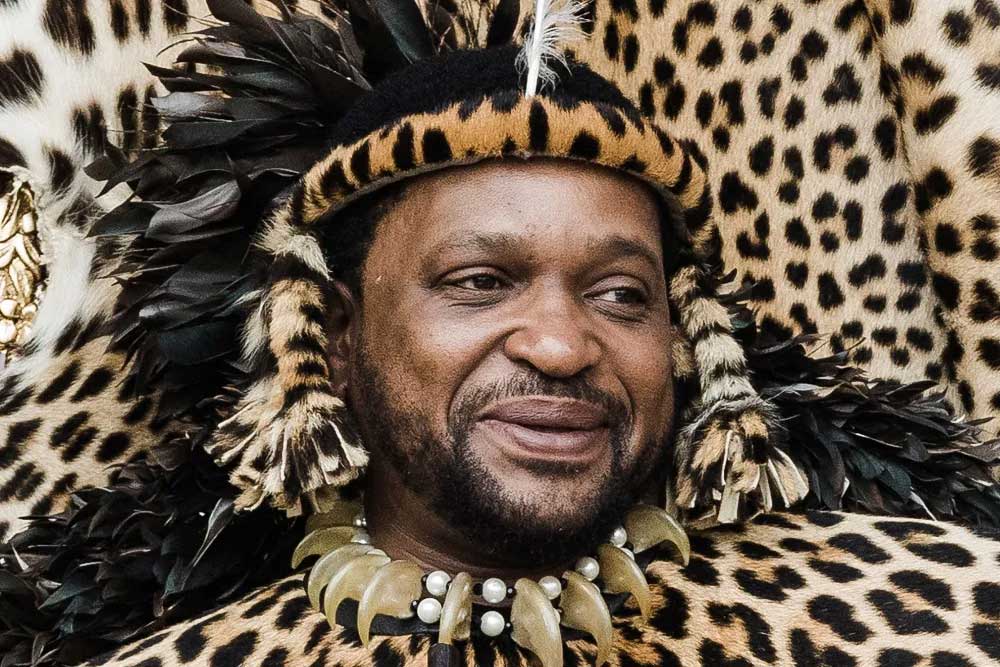
The Zulu people represent South Africa’s largest ethnic group, a vibrant presence that dominates the modern socio-political landscape. In academic and historical discourse, the transition of the Zulu from a decentralized collection of clans to a unified hegemony necessitates a shift in terminology. While colonial administrators frequently employed the term “tribe” to label groups they perceived as existing outside the bounds of European “civilization,” this label fails to capture the political sophistication of the Zulu state.
In the indigenous tongue, the term isizwe serves as the descriptor for both “tribe” and “nation,” yet historians argue that the post-Shaka era belongs definitively to the latter category. The Zulu Nation, as established in the early 19th century, was a centralized, stratified state with a cohesive national identity. Understanding this distinction is vital to appreciating how the Zulu evolved from a minor lineage into a global symbol of resistance and cultural pride.
Ancient Roots and the Nguni Migrations of the Zulu
The ancestral narrative of the Zulu is a chapter in the broader Bantu migrations, a millennia-long movement of people from the Congo Basin and West Africa toward Southeast Africa. The Zulu share their lineage with the Nguni peoples, tracing a genealogical path from the patriarch Ntu to Mnguni, and eventually to Luzumane.
History identifies Luzumane as the progenitor of the Zulu line, succeeded by Malandela. Traditional oral history describes a family dispute between Malandela’s sons, Zulu and Qwabe, over inheritance and status. According to this version, their mother, Nozidiya, relocated with Zulu toward Mthonjaneni to avoid conflict, effectively birthing the Zulu as a distinct clan.
However, as a Lead Cultural Historian, I must note the nuanced perspective offered by Prince Bhekizizwe Zeblon Zulu. He posits that there was no quarrel; rather, the separation was a strategic expansion and a ritual necessity. In Nguni custom, the death of an inkosi (king/chief) required sons to build new homesteads (amakhanda) and kraals, as the father was buried within the original family residence. Regardless of the catalyst, this era established the Zulu as an independent entity between the White Umfolozi and Mhlathuze rivers.
The Shaka Revolution: The Birth of a Zulu Kingdom (1816–1828)
The transformation of the Zulu from a minor clan of roughly 2,000 people into a dominant empire was the work of Shaka kaSenzangakhona. An illegitimate son of Chief Senzangakhona, Shaka rose to prominence as a brilliant commander under King Dingiswayo of the Mthethwa. Upon seizing the Zulu throne in 1816, he launched a series of military and social revolutions that triggered the Mfecane (the “Crushing”)—a period of widespread upheaval and state formation across Southern Africa.
Military and Administrative Innovations of the Zulu State:
- The Amabutho System: Shaka moved the military from lineage-based groups to age-based regiments (amabutho). By housing young men in barracks far from their home clans, he effectively replaced narrow kinship ties with a singular national loyalty to the Zulu monarch.
- Tactical Shifts: The introduction of the “Impi” system, the short stabbing spear (iklwa), and the “buffalo horn” encirclement formation allowed the Zulu to outmaneuver and overwhelm traditional confederations.
- Centralization: Shaka absorbed approximately 300 diverse chiefdoms into a single hegemony, creating a unified Zulu identity where none had existed before.
- Total Authority: The King became the supreme commander, the ultimate legal judge, and the spiritual intermediary (the “Lord of the Sky”), possessing absolute power over life and death within the Zulu realm.
The Zulu System of Government and Social Stability
At its peak, the Zulu nation functioned through a sophisticated administrative hierarchy designed to ensure loyalty and stability.
- Izinduna and Amakhosi: The King governed through Izinduna (deputies) and local Amakhosi (chiefs). Crucially, Shaka and his successors often selected Izinduna from families with no royal blood. This was a calculated political move to ensure these powerful officials had no hereditary claim to the throne, thereby preventing potential usurpations.
- Amakhanda: These royal homesteads or military barracks served as more than just defense outposts; they were the logistical centers for the Zulu state, managing resources like grain and the royal cattle herds.
- Ukusisa and Wealth: Cattle were the lifeblood of the Zulu economy. Through the system of ukusisa (clientship), the King distributed cattle to his subjects. This fostered a network of mutual obligation, as the subjects gained sustenance and status while the King secured their unwavering political allegiance.
Clash of Empires: The Anglo-Zulu War and Colonial Absorption
By the late 19th century, the Zulu Kingdom, then under the rule of King Cetshwayo, became an obstacle to British imperial desires in Southern Africa. Despite the Zulu desire for peace, a British ultimatum designed to be impossible to fulfill led to a brutal conflict.
Key Milestones of the Zulu Colonial Era
| Event/Date | Outcome/Impact |
| British Ultimatum (1878) | Britain demanded King Cetshwayo disband the Zulu army and accept a British resident; the King’s refusal led to the invasion of Zululand. |
| Battle of Isandlwana (Jan 1879) | A stunning Zulu victory; over 1,300 British troops were killed, marking one of the greatest defeats of a modern empire by an indigenous force. |
| Battle of Ulundi (July 1879) | The final, decisive British victory. The Zulu capital was burned, King Cetshwayo was captured, and the kingdom was divided into 13 “kinglets.” |
| Absorption (1897) | Following years of internal strife stoked by colonial “divide and rule” tactics, Zululand was formally absorbed into the Natal Colony, ending Zulu political autonomy. |
The Apartheid Era and the Road to KwaZulu-Natal
The 20th century saw the Zulu people navigate the oppressive structures of the Apartheid regime. The government’s “Bantustan” policy sought to disenfranchise Black South Africans by creating ethnic homelands. In 1970, the Bantu Homeland Citizenship Act stripped Zulu people of their South African citizenship, making them legal citizens of the fragmented KwaZulu territory.
During this era, Chief Mangosuthu Buthelezi revived the Inkatha YeSizwe movement. While ostensibly a cultural organization, it became a powerful political force that occasionally clashed with the African National Congress (ANC). Following the fall of Apartheid and the democratic elections of 1994, the KwaZulu homeland was reintegrated to form the modern province of KwaZulu-Natal, where the Zulu monarch continues to serve as a vital cultural figurehead.
Culture and Worldview: Ubuntu, Isithunzi, and Ilobolo
Zulu culture is a complex tapestry of moral philosophy, social economics, and expressive art.
- Ubuntu and Isithunzi: At the heart of the Zulu worldview is Ubuntu (humane moral culture). However, this is deeply linked to the concept of Isithunzi (prestige, shadow, or moral weight). One must live with Ubuntu to maintain their Isithunzi, which is the prerequisite for becoming a respected ancestor (idlozi) after death.
- Ilobolo (Bride Wealth): A fundamental social and economic pillar, ilobolo is the practice of a groom providing cattle to the bride’s family. It is not a “purchase” but a ritualized contract that stabilizes marriages and links families. In 1869, colonial administrators attempted to codify this by setting the price at 10 cattle for commoners, though many Zulu continue to view it as a sacred tradition beyond colonial mathematics.
- Beadwork as Communication:Zulu beadwork is a visual language. Specific color schemes convey precise meanings:
- Isisshunka: A multi-colored scheme with no specific message, used for general beauty.
- Isithembu and Umzansi: Schemes associated with specific clans or regions.
- Isinyolovane: A vibrant combination symbolizing perfection and charm.
- Messages regarding love, jealousy, and status are woven into these patterns, though meanings for colors like green (jealousy vs. grass) can vary by district.
- Ceremony and Religion: The Umhlanga (Reed Dance) remains a vital annual event where young women celebrate their heritage and values. While most modern Zulu identify as Christian, many practice a syncretic faith that incorporates the honoring of ancestors (amadlozi) as intermediaries to the Creator.
Conclusion: The Zulu in the Modern World
The legacy of the Zulu revolution extends far beyond the borders of South Africa. The Mfecane sent Zulu-influenced groups across the continent, leading to the birth of the Ndebele in Zimbabwe under Mzilikazi and the Ngoni in Zambia and Malawi under Zwangendaba.
Today, the Zulu identity remains a dominant force in the 21st century. As the largest ethnic group in the nation, the Zulu language (isiZulu) is understood by over half of the South African population. From the battlefields of Isandlwana to the modern halls of government, the Zulu people continue to embody a history of resilience, centralization, and an “unconquerable spirit” that remains central to the identity of the African continent.
